As I've blogged before, radiology is a pretty darned sedentary job. The "exercise more" part is definitely going to have to come outside of work.
It would be really nice to starve at least one of those sixteen cannibals by summertime...
Shedding invisible light on medical imaging
Going into radiology is not widely considered to be an effective mating strategy. Anyone who thinks working around magnetic resonance imaging also makes you a magnet for babes or hunks is soon sadly disabused. However, this story gives some hope to geeks of all ilk.(Via Fake Steve Jobs.)
The Seattle Post-Intelligencer recently challenged its readers to write their life story in just six words. The results of this challenge are now online.one of five women wounded in a July 2006 shooting at the Jewish Federation of Greater Seattle -- a shooting that claimed the life of annual-campaign director Pamela Waechter.Her memoir:
Bullies keep trying; I thrive anyway.
Raised daughters. Still don't understand women.
Now playing. Held over. Ends soon.
Great jobs; good dogs; mediocre men.
Shedding invisible light on medical imaging.
I didn't make up the title of this post -- it's from an article on the Medscape site called: To "Glow" Where No One Has Gone Before: The Risk for Radiation to Space Exploration.These materials may discuss therapeutic products that have not been approved by the US Food and Drug Administration and off-label uses of approved products.Hmmm.... medical care in space? Off label? You think?
Solar particle events (SPEs) are primarily responsible for generating high-energy proton emissions from the sun during solar storms.

...airlines routinely work around the impact of SPEs (solar particle events) on polar flight trajectories...Eek. A polar flight trajectory would describe any number of my flights to Europe. Who knew that the airlines are already factoring in space weather along with the much more prosaic terrestrial weather we expect!
Is there a risk to the central nervous system and brain from exposure to heavy ions at the level that would occur during long missions into deep space? In other words, to quote Derek I. Lowenstein of Brookhaven National Laboratory, "If every neuron in your brain gets hit, do you come back being a blithering idiot, or not?
NASA appears to be hard at work studying the effects of long-term radiation in space. For example:"Fred" the Phantom Torso -- "part-dummy, part dosimeter-imbedded torso [that] is a mock-up of a human's upper body, minus a set of arms" -- was flown to the ISS and set up in Node 2 (the attachment point for the US Laboratory). Its purpose: to yield a more accurate portrait of human radiation exposure in the station.Thanks for taking one for the team, "Fred" -- if that is your real name.

Researchers at Duke University and the University of Waterloo have just released the results of a study which suggests that people may behave differently after being exposed subliminally to a brand's logo.Automatic Effects of Brand Exposure on Motivated Behavior: How Apple Makes You “Think Different”. GrĂ¡inne M. Fitzsimons, Tanya L. Chartrand, Gavan J. Fitzsimons. Journal of Consumer Research, Vol. 35, June 2008. Electronic version published March 4, 2008.In this study, subjects exposed to the Apple logo for just 30 milliseconds exhibited more creativity than subjects similarly exposed to an IBM logo.
replaced his Thinkpad with a Mac three months ago. “I figure I’ll be walking by it everyday and sometimes I’ll see it without thinking,” he tells us. “I felt like if I really believe this stuff, I should put my money where my mouth is.”
This has inspired me to start planning a randomized controlled trial using my residents and medical students as guinea pigs. The question I want to answer: "Which will make them act smarter: staring at a brain MRI or a barium enema?"
Despite my job title, I am actually an applied anatomist by trade. I've spent years stuffing an atlas of the human body into my brain. I now spend my days comparing that atlas with the anatomy that walks into my office daily in the form of patients. 
The mother and child in X-Ray Vision 1
Pamela Anderson, the rattlesnake and the popsicle in X-Ray Vision 2
The horse and the hand holding a mouse in X-Ray Vision 3
The sheep in X-Ray Vision 4
The Coke bottle in X-Ray Vision 5
The Coke truck in X-Ray Vision 6

Hot off the press!
Three, count 'em, 3 reasons why I'm not in the skin trade:
Automobile commuters are not the only ones who make their daily drive with an iPod up on their dashboard. The photo below was cropped from this hi-res photo of the Space Shuttle Endeavour, currently docked at the International Space Station in low earth orbit.
Most radiologists now store and view their images via a picture archival and communications system (PACS).(Via Daring Fireball)
Bobrow, B.J. (2008). Minimally Interrupted Cardiac Resuscitation by Emergency Medical Services for Out-of-Hospital Cardiac Arrest. JAMA, 299(10), 1158-1165.This study compared standard advanced life support with a new protocol known as minimally interrupted cardiac resuscitation (MICR). The results: patients treated with MICR were at least 3 times more likely to survive their cardiac arrest than patients treated with the standard life support protocol.
During resuscitation efforts, the forward blood flow produced by chest compressions is so marginal that any interruption of chest compressions is extremely deleterious, especially for favorable neurological outcomes. Excessive interruptions of chest compressions by prehospital personnel are common. Therefore, MICR emphasizes uninterrupted chest compressions.In other words: CPR is a very poor substitute for an actual heart. Interrupting chest compression downgrades this "poor" to "piss poor".

...positive pressure ventilations during cardiac arrest may be harmful because they increase intrathoracic pressure, thereby decreasing venous return and subsequent myocardial and cerebral blood flow. Probably due to the excitement and stress of resuscitation efforts, excessive ventilations by both physicians and EMS personnel are common.
Immediately after a sudden VF cardiac arrest, aortic oxygen and carbon dioxide concentrations do not vary from the prearrest state because there is no blood flow and oxygen consumption is minimal. Therefore, when chest compressions are initiated, the blood flowing from the aorta to the coronary and cerebral circulations provides adequate oxygenation at an acceptable pH. At that time, myocardial oxygen delivery is limited more by blood flow than oxygen content. Adequate oxygenation and ventilation can continue without rescue breathing because the lungs serve as a reservoir of oxygen that allows adequate oxygen exchange with the limited pulmonary blood flow during cardiopulmonary resuscitation...
In addition, substantial ventilation occurs from chest compression–induced gas exchange (ie, small volumes exhaled with each compression and inhaled with chest recoil) and spontaneous gasping by the patient in cardiac arrest during cardiopulmonary resuscitation.Is it time to change the way we do CPR? Maybe. Maybe not.
These results need to be confirmed in a randomized trial.I agree. If a randomized controlled trial corroborates the findings in this study, I expect to see a lot of changes in official CPR protocols. For an excellent further commentary on this study, please see this JAMA editorial.
At this point, you might be wondering: "How can CPR possibly matter to a radiologist?"
I guess you could say this event made CPR really, really relevant to me -- relevant not only as a physician, but also as a precocious geezer and potential CPR customer myself. These days I travel to local dances with a personal AED just in case cardiac lightning strikes again in my vicinity. If it does, I'm also going to pay a lot more attention to my chest compressions, and keep them as uninterrupted as possible.
Q. What's so special about the following 3 numbers: 14,457, 102,839 and 1,342,284?

Anyhow, take a second today on 3/14 at 1:59:26 p.m. to celebrate this transcendental constant with what else -- Pie! I'm thinking apple, cherry or marionberry, myself.

"What's the matter?" I asked.I flashed back to that scene tonight while reading Tim Bray's Ongoing blog. He is currently reading LOTR to his 8 year-old son, and printed out the wonderful MearthMap Map of Middle Earth as a companion to the book. As he says,
"Your Gollum voice was reeaallly scary!"
...it’s astounding. It’s in vector format (a 1.2M PDF), which means effectively infinite scaling, which it turns out you really need if you want to be able to locate Dimrill Dale or Durthang. I extracted just the part of the map where the action occurs and printed it out on a huge glossy sheet of paper and it was a fine companion to the story.It is, indeed, a lovely map. I've got it stashed away on my hard drive against future need, which will hopefully be sometime before my son graduates from high school. This past December, I got new hope that that might actually come true. New Line Cinema announced that Peter Jackson will indeed be filming not only The Hobbit but also another LOTR prequel. If they stay on their proposed schedule, it looks like we will be needing that map around 2010 - 2011 when the films are released.
The Obsolete Skills blog has a large compendium of skills that are, well, obsolete. (via Daring Fireball)

Snarky things that might be listed by non-radiologists:
It is every physician's duty to help prevent cancer. For radiologists, this usually involves imaging patients with mammograms, chest X-rays, CT and MR scans. However, we are always delighted to learn from the media of low cost, low tech and zero-radiation alternatives that might reduce the risk of breast or prostate cancer. This news is especially intriguing when the suggested therapeutic tools are, respectively, fellatio and masturbation. (via M.D.O.D)
"responded to legal threats by apologising for the false report to his university and to CNN and to "all men who did not take advantage of this article in time ..."Harumpf. At least one can still make a convincing case for breast palpation among consenting adults.
Ejaculatory frequency, especially in early adult life, is negatively associated with the risk of prostate cancer.Gosh, this is sounding better and better all the time! However, a True Skeptical Warrior™ should exercise a bit more due diligence than just reading the abstract.
A perusal of the actual paper itself adds further evidence to the authors' claim. The study population of 1079 cases and 1259 controls would seem to be an exemplary sample size. The authors describe numerous confounding variables they controlled for, supportive evidence from other papers, and several potential (and testable) biological mechanisms whereby whacking off may also whack off some of the cancer risk.
Since Mount St. Helens blew its top in 1980, the U.S. Forest Service and the U. S. Geological Survey have kept a pretty close eye on this particular piece of Washington State. As far as I know, they aren't using X-rays on the volcano, but the images they are producing are still quite wonderful.


... called up a handful of companies, and asked them to send out a couple of engineers each, to see what they could accomplish in two weeks on an SDK they'd never seen before. In fact, most of them had never touched a Mac for development before.A number of these nifty applications were then shown to the crowd. One of my faves:
10:41 PT: In two weeks, they wrote a game, Touch Fighter. OpenGL game, OpenAL for audio. Using accelerometer to fly the ship by moving the phone, and tap on the screen to fire.I'm not big on gaming, but can imagine using this same technology to fly through a 3D CT scan like the one below, by banking my iPhone back and forth. I'll bet that the mighty radiologist-programmers at OsiriX are already licking their chops at the thought of this. IMHO, an iPhone-based medical image viewer would immediately launch a lot of iPhones into the hands of not just radiologists, but practicing physicians of all ilk.

10:56 PT: Next: Epocrates. "Every doctor knows about Epocrates." Now Glenn Keighley from Epocrates. Shows a drug lookup UI, so doctors can find a drug, tap to view information about the drug. They used SQLite to store their drug data, and used the iPhone's high-resolution screen to show drug images for the first time on any mobile platform.This will be the killer iPhone app for my spouse, a clinician who uses Epocrates daily when writing prescriptions.
What will someone cram into an fMRI machine next? Earlier this week I posted about the use of functional magnetic resonance imaging (fMRI) to study brain activity in keyboard musicians while they were improvising jazz. It would now appear that even drivers with cell phones are not safe from fMRI researchers."Behavioral studies have shown that engaging in a secondary task, such as talking on a cellular telephone, disrupts driving performance. This study used functional magnetic resonance imaging (fMRI) to investigate the impact of concurrent auditory language comprehension on the brain activity associated with a simulated driving task."Despite the title of the article, they did not study actual driving -- the sheer size of a decent fMRI scanner precludes this. To see the difficulty, imagine driving down the road with a your head stuffed inside a roll of toilet paper that is 7 feet in diameter. By the way, the toilet paper roll also weighs several tons, and has magnetic and radio frequency fields strong enough to send a cell phone flying and frying. Understandably, the investigators chose to simulate driving and cell phone conversations by other means.
"Participants steered a vehicle along a curving virtual road, either undisturbed or while listening to spoken sentences that they judged as true or false. "How did the simulated drivers do?
"The dual task condition produced a significant deterioration in driving accuracy caused by the processing of the auditory sentences. At the same time, the parietal lobe activation associated with spatial processing in the undisturbed driving task decreased by 37% when participants concurrently listened to sentences."The bottom line:
"The findings show that language comprehension performed concurrently with driving draws mental resources away from the driving and produces deterioration in driving performance, even when it does not require holding or dialing a phone."This conclusion is not exactly a bolt from the blue -- they cite a number of other studies that echo the same conclusion: your driving sucks when you use a cell phone, hands-free or not.

Q. Which is more effective -- treatment A or treatment B?
A. The null hypothesis that treatment A is not more effective than treatment B is rejected at the 5% level, i.e. P = 0.05.
Q. Er, um, so in other words, there's a 95% chance that they are different?
A. No. It means that if we were to repeat the analysis a bunch of times, using new data each time, then we would only falsely reject the null hypothesis 5% of the time if it were really true.

He gave me this on our anniversary.
He gave me this for nothing at all.
There's no excuse for domestic violence. Talk to someone who cares.

He gave me this when he proposed.
He gave me this for nothing at all.
There's no excuse for domestic violence. Talk to someone who cares.

He gave me this for my birthday.Kudos to the advertising agency TBWA\RAAD of Abu Dhabi, UAE; to Martin Lever, their creative director; Sherif Galal, their art director / Iilustrator; and Martin Lever and Farrukh Naeem, copywriters, for truly outstanding work.
He gave me this for nothing at all.
There's no excuse for domestic violence. Talk to someone who cares.

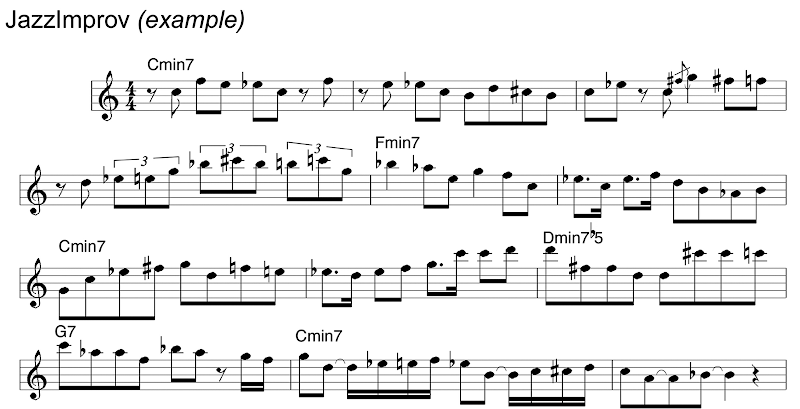
How and why did humans evolve the ability to make and hear music?I'll bet that music is going to turn out to be a secondary use of some neural structure selected for its usefulness in some serial-timing task like language or throwing -- and used in the off-hours for music.In a recent PLOS paper, researchers used functional MRI (fMRI) to take a peek under the hood of the brains of jazz musicians.

Axial slice renderings of mean activations (red/yellow scale bar) and deactivations (blue/green scale bar) associated with improvisation during Scale and Jazz paradigms. From: Limb CJ, Braun AR (2008) Neural Substrates of Spontaneous Musical Performance: An fMRI Study of Jazz Improvisation. PLoS ONE 3(2): e1679. doi:10.1371/journal.pone.0001679An fMRI machine measures real-time changes in brain blood flow while a subject is doing something of interest. Hopefully, this changing blood flow also closely mirrors changes in local neural activity. The end result is a 3D map of which specific cerebral wheels, gears and pulleys are turning while one, say, takes a poop or improvises on a Bach fugue.

Our results strongly implicate a distinctive pattern of changes in prefrontal cortical activity that underlies the process of spontaneous musical composition. Our data indicate that spontaneous improvisation, independent of the degree of musical complexity, is characterized by widespread deactivation of lateral portions of the prefrontal cortex together with focal activation of medial prefrontal cortex. This unique pattern may offer insights into cognitive dissociations that may be intrinsic to the creative process: the innovative, internally motivated production of novel material (at once rule based and highly structured) that can apparently occur outside of conscious awareness and beyond volitional control.As a radiologist, I'm delighted to see cool new uses of the machines I work with every day. When I started my career, we were happy just to be able to distinguish gray matter from white matter. It now appears that we are beginning to look at some of the nuts and bolts of creativity itself.